Learn to Lead the Future with the Power of AI
Kuwait
AI, Innovation & Leadership Bootcamp
By Stanford & Cambridge Alumni
With this bootcamp, students learn to build real, impactful AI solutions under the guidance of world-class mentors. Through hands-on projects, ethical AI training, teamwork, and pitch development, teens go from curious learners to confident innovators – leaving with a portfolio-ready AI prototype and future-ready skills that boost their confidence, college applications, and career pathways.
Program Details
Location
Kuwait
Venue
15th Floor, Hamad Tower, Khalid Ibn Al Waleed Street
Dates
27th - 30th December, 2025
(Saturday - Tuesday)
Duration
4 Days
Time
9AM - 5PM AST
Age Groups
13-18 Years
How It Works
Learn & Collaborate
Students begin with interactive workshops, problem framing, and dynamic team formation. They explore real-world challenges in healthcare, education, environment, and more while getting hands-on with beginner-friendly AI tools to spark their first ideas.
Build & Transform
Teams dive into rapid prototyping, using AI platforms to design features, create intelligent interactions, and test their solutions in real time. With mentor guidance, they refine their prototypes, apply ethical AI principles, and level up their product thinking.
Present & Shine
On the final day, students pitch their AI solutions to expert judges, share live demos, and receive professional feedback. All the teams join to celebrate as they earn their certificates, showcase their achievements, and build confidence as young innovators.
From Ideas to Impact: The 4 Day Journey
Find Problems Worth Solving
- Identify real-world problems worth solving
- Form diverse, complementary student teams
- Learn Stanford-style problem framing techniques
- Explore impact areas like health, education
- Create roadmap and first AI interaction
Build Your AI Solution
- Build core features using AI tools
- Develop intelligent, interactive app behavior
- Learn ethics: bias, privacy, fairness
- Create Model Card for responsible use
- Test prototype and refine rapidly
Polish & Perfect Your Pitch
- Conduct user testing to improve UX
- Fix issues and polish app visuals
- Add advanced features and integrations
- Craft compelling story-driven pitch deck
- Practice demo delivery with mentor support
Present & Celebrate
- Final rehearse on real presentation setup
- Deliver polished pitch to expert judges
- Present app during interactive demo fair
- Celebrate achievements in awards ceremony
- Receive certificate and portfolio-ready project
Impact & Outcomes
• Build A Real, Portfolio-Ready AI Project
• Master Ethical & Responsible AI Thinking
• Develop Strong Teamwork & Leadership Skills
• Gain Confidence Presenting To Expert Mentors
• Build Standout College Applications Profile
Meet Your Mentors
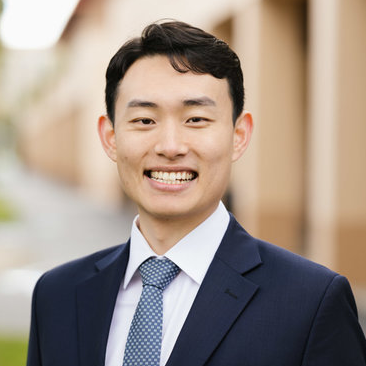
Chan Leem
MA in International Policy, School of Humanities and Sciences
About Chan Leem
Chanwool (Chan) Leem, from Bucheon, South Korea, is pursuing the Ford Dorsey master's in international policy at Stanford University. He graduated from Seoul National University with bachelor's degrees in Hispanic language and literature, and political science and international relations. Chan's research interests include developing effective international rules for cyberspace that meaningfully reflect the viewpoints and interests of nongovernmental stakeholders.
Before Stanford, Chan served as a diplomat. He represented South Korea at U.N. cybersecurity negotiations, spearheaded the country's first-ever participation at a NATO summit, negotiated and implemented military agreements with the United States Forces Korea, and worked on South Korea's diplomatic rapprochement toward Cuba. For military duty, he served in the 8th U.S. Army as a KATUSA sergeant (E-5) and received an Army Commendation Medal. He received the Foreign Ministry's Outstanding Policy Report Award in 2021 and was a Fulbright Scholarship candidate in 2022.
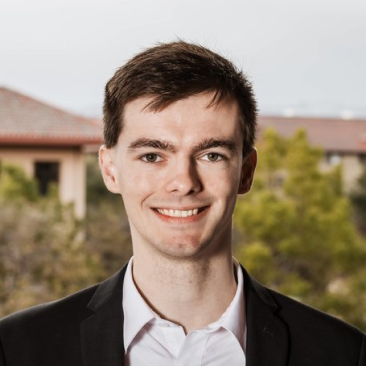
Andrew Couch
PhD in Management Science and Engineering
About Andrew Couch
Andrew Couch, from Huntsville, Alabama, is pursuing a PhD in management science and engineering with a focus on decision and risk analysis at Stanford School of Engineering. At the University of Alabama in Huntsville, he earned both a bachelor's degree and a master's degree in industrial and systems engineering. At 17, he earned a bachelor's degree in management from Thomas Edison State University.
Andrew aspires to advance the economic well-being of everyday individuals, small businesses, and rural communities through applied research in data-driven decision-making under uncertainty. With interests in data science, he has conducted engineering research that tackles barriers in STEM education, school safety, and nursing shortages throughout Alabama.
Through his service as an Engineering Research Fellow at the National Institute of Standards and Technology, his research identifies novel pathways to technology industrialization for small enterprises lacking adequate technology access. Andrew is a widely published author of engineering research.
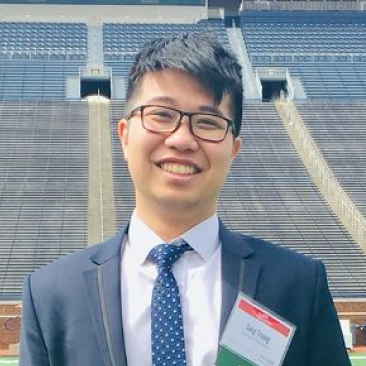
Sang Truong
Computer Science PhD
About Sang Truong
Sang Truong is a Computer Science Ph.D. student at Stanford University and a researcher at the Stanford AI Lab, where he develops methods to evaluate and align AI systems with human values. His work combines tools from measurement theory, preference learning, and decision theory to ensure AI models are safe, reliable, and fair.
At Stanford, he has contributed to major research on language model evaluation, introducing adaptive testing frameworks like Item Response Theory to improve benchmarking efficiency and robustness. His research spans foundational ML theory and real-world applications, with active contributions to Stanford-led initiatives such as HELM and the Human-Centered AI community.
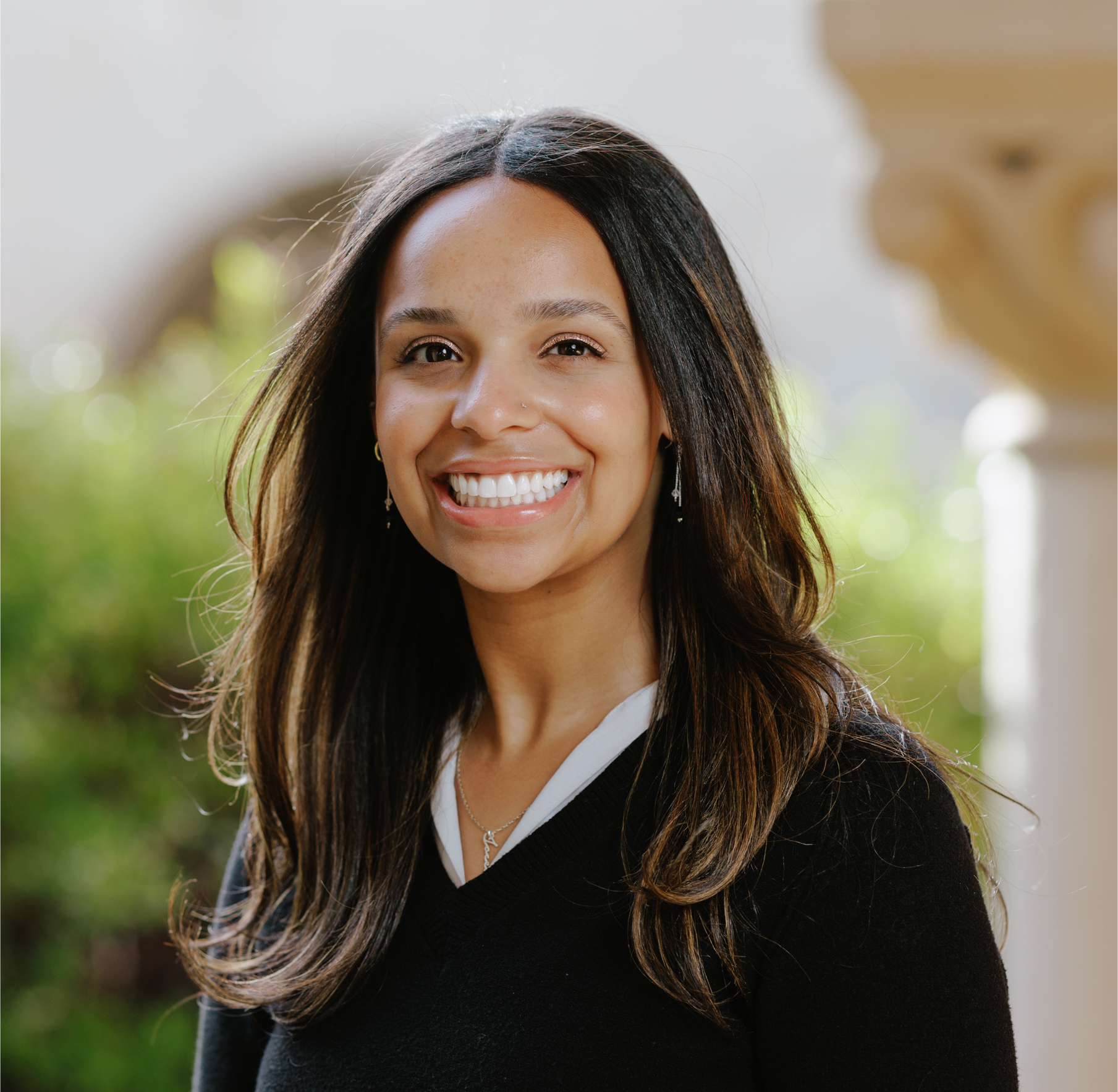
Jocelyn
PhD candidate in Neurosciences at Stanford University
About Jocelyn A. Ricard
I am currently a PhD candidate in Neurosciences at Stanford University. I am a National Science Foundation (NSF) Graduate Research Fellow, a National Academies of Sciences Engineering and Medicine Ford Foundation Predoctoral Scholar, an Institute of International Education (IIE) Quad Fellow, and a Stanford University Knight-Hennessy Scholar!
My research investigates the impact of neighborhood disadvantage on adolescent neurodevelopment and its downstream effects on substance use. Additionally, I examine how methodological practices in human neuroimaging impact the generalizability of neuroscience research.
Prior to starting at Stanford University, I worked as a post-baccalaureate computational research assistant at the Deutsches Zentrum für Neurodegenerative Erkrankungen (DZNE) in Berlin, Germany, followed by a research assistant position in neuroscience at Yale University.
Mentors featured are from prior cohorts.
Secure your spot today!
Don’t miss this transformative opportunity to learn from expert mentors and build the future with AI.
Kuwait
9AM - 5PM AST
Registration Deadline: 2025-12-26
Register as a School
Enter your details our school relationship manager will contact you shortly.
Submission Successful
Thank you for registering your interest. Our school relationship manager will get in touch with you soon.
For more information, please contact us at this number: +965 971 34499
Frequently Asked Questions
Does my teen need coding experience?
Absolutely not! We use AI-powered tools that let students build by describing what they want. We’ve had complete beginners build impressive applications. That said, students with coding experience will still be challenged with advanced features and concepts.
What if my teen isn't "techy"?
Perfect! We need all types of thinkers. Some of our most successful students are storytellers, artists, and problem-solvers who’ve never considered themselves “tech people.” Teams are intentionally diverse—we need designers, communicators, and creative thinkers just as much as technical builders.
Will my teen actually build something that works?
Yes! Teams build working prototypes. By the end of the conference, they’re demoing polished applications. You’ll see it yourself at the final presentations.
How technical is this bootcamp?
We balance accessibility with depth. Students use cutting-edge AI tools without needing to write code from scratch. But they will learn real concepts: user experience design, AI ethics, product thinking, and how to communicate technical ideas.
What's the mentor-to-student ratio?
1:8. We keep groups small so every student gets personal attention. Mentors rotate through teams throughout each day, and students can always ask for help.
Can I observe or stay during the bootcamp?
The learning space is for students and mentors only to maintain focus and allow teens to take ownership. However, you’re warmly invited to the final presentations on the last day (1:00-5:00 PM) where you’ll see everything they’ve built!
Is this program safe? What supervision is provided?
Student safety is our top priority. Mentors are background-checked, first-aid certified, and trained in youth engagement. Students are supervised throughout the day. We have clear codes of conduct and emergency protocols.
What happens if my teen gets sick or has an emergency?
Contact us immediately. We’ll work with you on a case-by-case basis. For medical emergencies during the bootcamp, we have protocols in place and will contact you right away.
Can my teen attend with friends?
Yes! Friends are welcome to register together, and we offer group discounts for 3+ students. However, we intentionally form diverse teams, so friends may not be on the same team—this helps everyone make new connections.
How are teams formed?
Thoughtfully! We assess each student’s interests and strengths through activities, then form balanced teams with diverse skills: builders, designers, communicators, and problem-solvers. This diversity makes projects stronger.
Will this help with college applications?
Absolutely. Students gain:
- A portfolio-worthy project to showcase
- Demonstration of technical skills and initiative
- Unique essay material (the innovation process, teamwork, challenges overcome)
- Potential letter of recommendation from mentors
- Official certificate validating 32+ hours of advanced training
Admissions officers look for students who show passion and initiative beyond the classroom—this bootcamp provides concrete evidence of both.
What if my teen wants to continue after the bootcamp?
We provide resources for continued learning:
- Recommendations for next steps (courses, competitions, clubs)
- Information about other hackathons and tech events
- Guidance on entering projects in science fairs or competitions
- Option to return as a junior mentor in future bootcamps
*All bootcamps are delivered by mentors who are either current students, graduate students, alumni, or professors. Our programs are facilitated by individuals from these profiles and do not represent a direct association with the university.